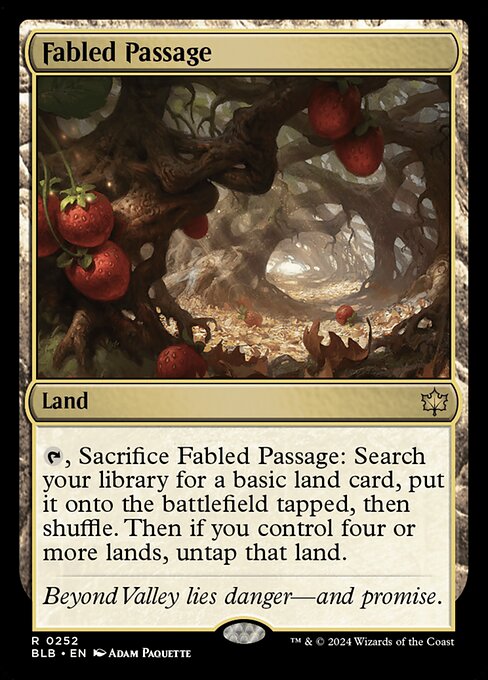
 Rare
Rare
Fabled Passage
Land

Viewing offers in Near Mint condition
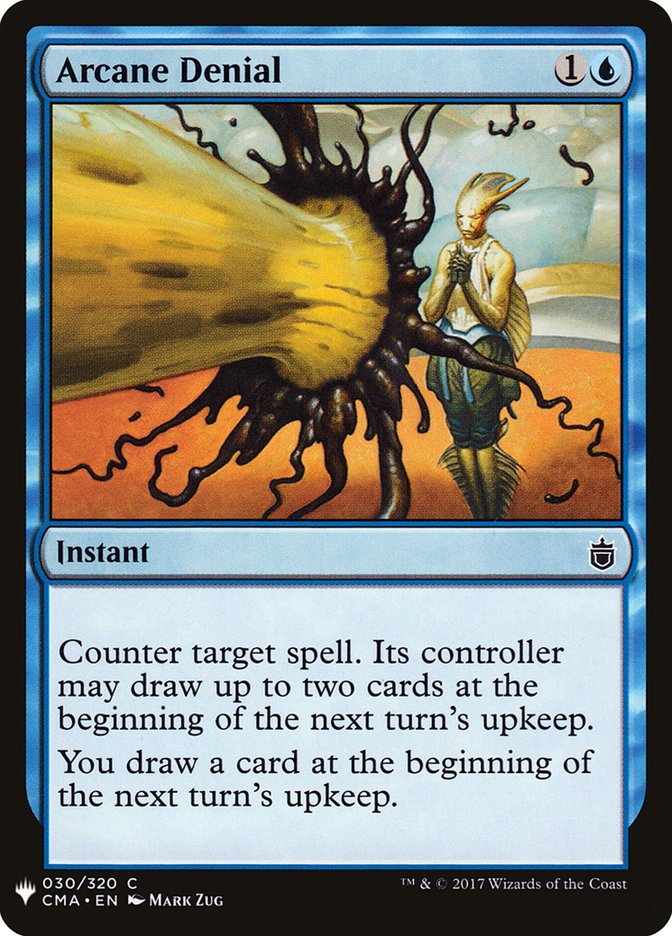
Counter target spell. Its controller may draw up to two cards at the beginning of the next turn's upkeep.
You draw a card at the beginning of the next turn's upkeep.

 Mana Cost
Arcane Denial is a deceptively efficient blue answer that shines most in tempo and control shells, especially lists that want to keep mana open while staying ahead on cards. For just two mana, it cleanly counters almost any spell, and the delayed draw makes it feel less like a hard “no” and more like a bargain with the stack: you stop the immediate threat, then let the game’s resources rebalance later. That makes it especially strong in decks that can exploit the time you buy, such as flash-heavy builds, draw-go control, or combo lists protecting a key turn. A useful tip is to pair it with engines that punish extra cards for the opponent, or with effects that care about spell timing, so the opponent’s draw becomes less relevant. In Commander and other multiplayer formats, it often serves as a politically flexible answer that keeps you developing while preserving interaction.
Generated using gpt-5.4-mini
Peer-to-peer marketplace offers
List it in under a minute and reach buyers already browsing this page.
Set your condition, quantity, and price. Your listing appears in the offers table above as soon as you publish it.
Cards frequently seen in the same public decks as this card.
Rare
Land
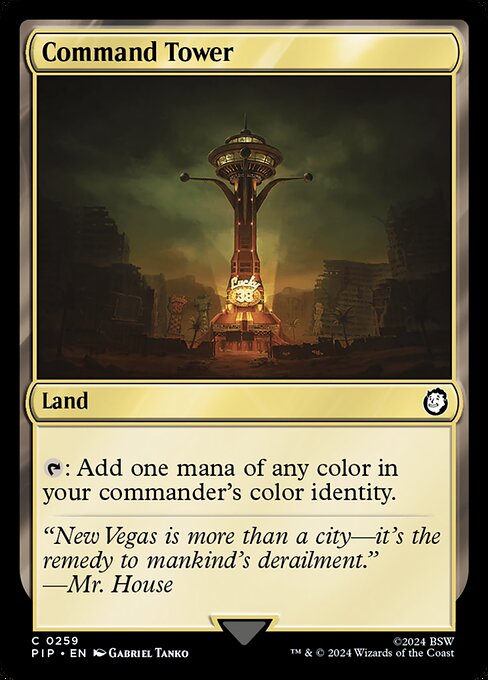 Common
Land
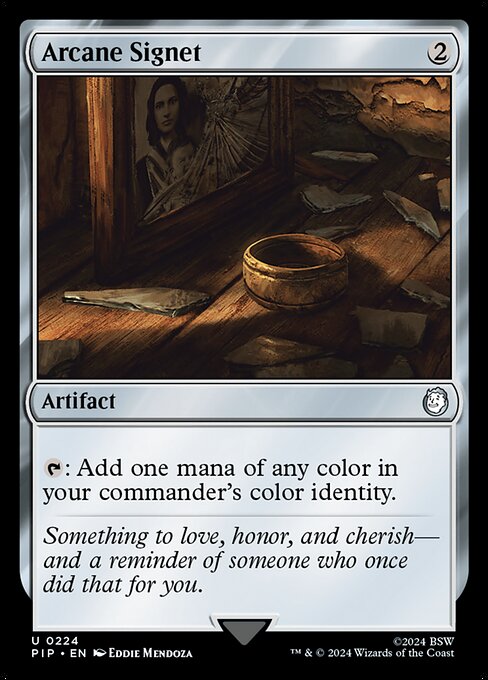 Uncommon
Artifact
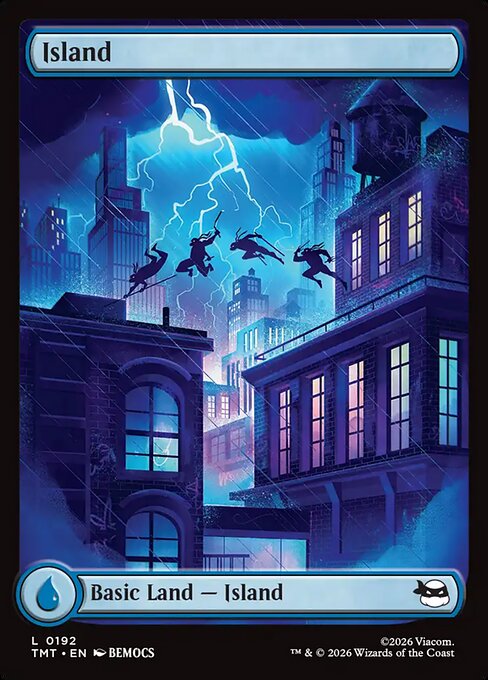 Common
Basic Land — Island
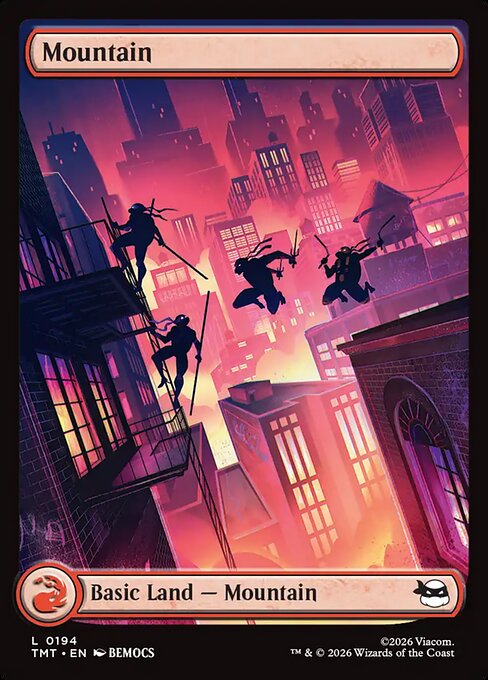 Common
Basic Land — Mountain
Arcane Denial is a deceptively efficient blue answer that shines most in tempo and control shells, especially lists that want to keep mana open while staying ahead on cards. For just two mana, it cleanly counters almost any spell, and the delayed draw makes it feel less like a hard “no” and more like a bargain with the stack: you stop the immediate threat, then let the game’s resources rebalance later. That makes it especially strong in decks that can exploit the time you buy, such as flash-heavy builds, draw-go control, or combo lists protecting a key turn. A useful tip is to pair it with engines that punish extra cards for the opponent, or with effects that care about spell timing, so the opponent’s draw becomes less relevant. In Commander and other multiplayer formats, it often serves as a politically flexible answer that keeps you developing while preserving interaction.
Generated using gpt-5.4-mini · Updated at 2026-10-01 04:20:42 UTC