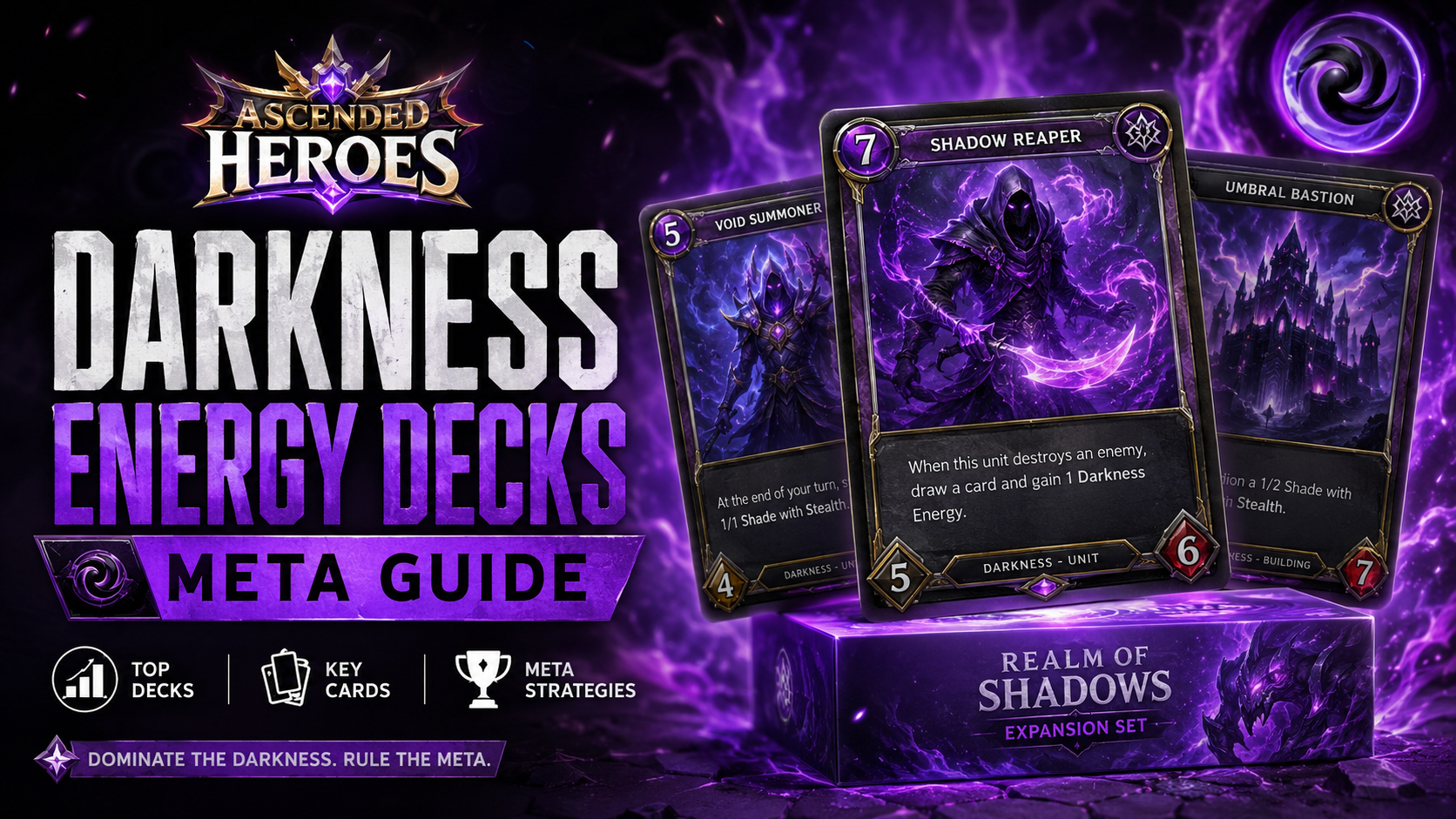
[Ascended Heroes] has put [Darkness Energy] back on the map for players who want efficient damage, flexible attacking patterns, and a reliable way to pressure prize cards every turn. In a format where tempo matters and one well-timed knockout can swing the game, Darkness-based decks are once again looking like a smart choice for competitive testing.
This guide breaks down why [Darkness Energy] is worth revisiting, how these decks tend to win prize races, and what they need from the current metagame to succeed. We’ll also look at practical deckbuilding and matchup considerations, plus a few resources to help you refine your play before your next event.
Why Darkness Energy Is Back in the Conversation
The biggest reason [Darkness Energy] is gaining attention in [Ascended Heroes] is simple: efficient acceleration plus high-impact attacks often creates a strong prize-trading engine. When a deck can power up attackers quickly and keep attacking without missing turns, it can force opponents into awkward lines and make recovery difficult.
In Pokémon TCG terms, Darkness strategies usually aim to do three things well:
- Establish early pressure with a low-cost attacker or setup piece.
- Convert energy acceleration into consistent knockouts.
- Stay flexible enough to adapt to different prize maps.
That third point is especially important in a metagame built around a variety of attacker types and engines. If your deck can threaten multiple prize targets without overcommitting resources, you gain a major edge in long rounds and Best-of-Three play.
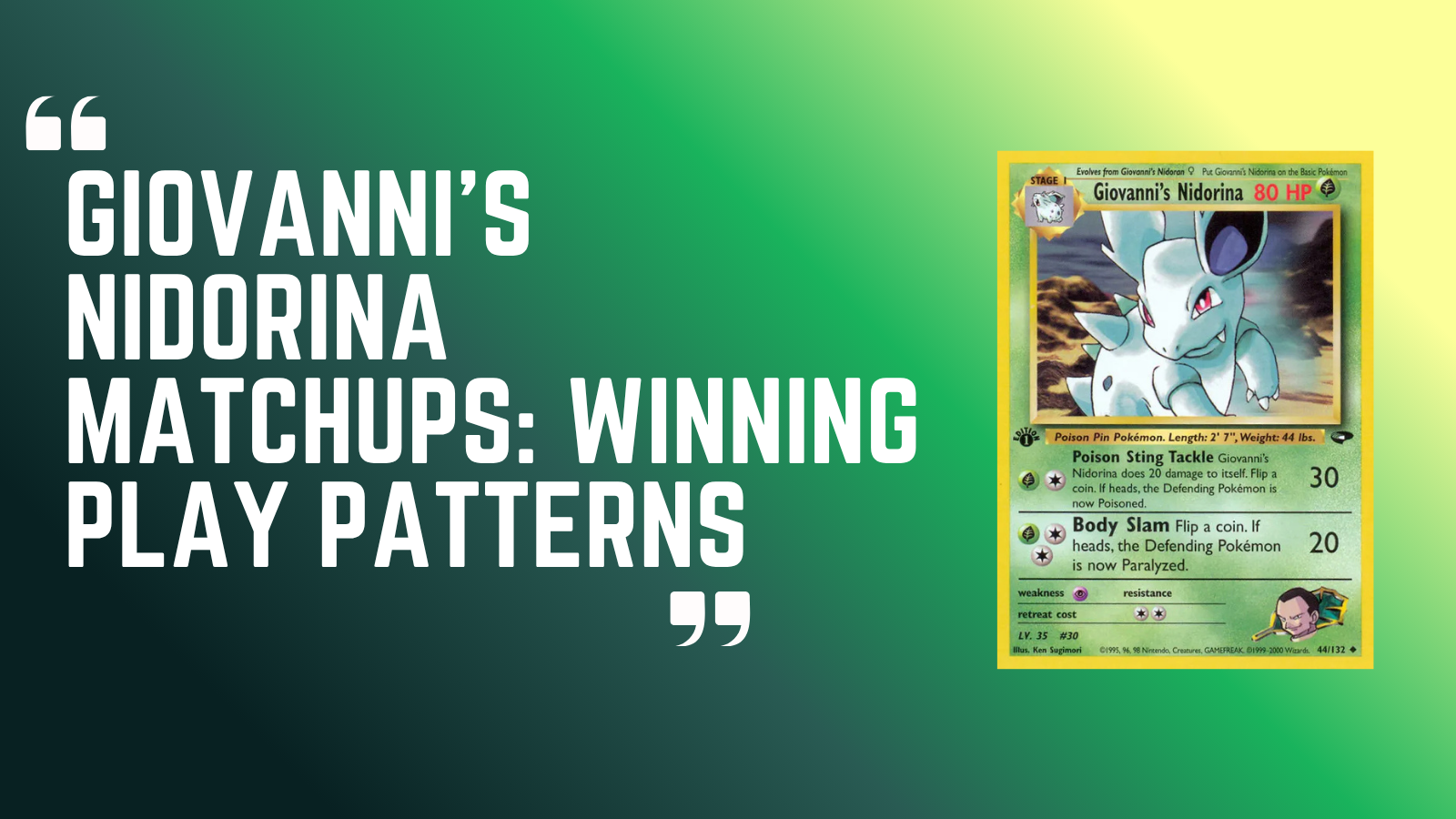
For a broader look at matchup planning and prize sequencing, it can help to study structured play patterns from other archetypes. The breakdown in Giovanni’s Nidorina Matchups: Winning Play Patterns is a useful example of how strong players think through pressure, timing, and reward mapping. Even when the deck is different, the decision-making principles transfer directly.
How Darkness Decks Win Prize Races
Competitive Darkness lists rarely try to win through pure raw damage alone. Instead, they often win by taking the first meaningful knockout, forcing inefficient responses, and then chaining attacks to stay ahead on prizes. That can create a snowball effect where the opponent never gets fully stabilized.
1. Early tempo matters more than late power
If your opening turns are clean, [Darkness Energy] decks can dictate the pace of the game. A fast setup creates the chance to attack before the opponent is fully online, which is often the difference between winning and falling behind. In a meta where setup decks need a turn or two to breathe, early pressure can be enough to distort the entire game.
2. Efficient KOs protect your tempo
Prize races are not just about taking prizes quickly; they are about taking the right prizes. Darkness attackers often shine when they line up clean one-hit knockouts on support Pokémon, evolving threats, or low-HP setup pieces. That makes [Darkness Energy] decks especially dangerous when they can repeatedly answer the opponent’s engine instead of over-chasing the Active Pokémon.
3. Resource denial creates extra turns
Darkness lists that maintain pressure while forcing the opponent to attach manually, retreat awkwardly, or rebuild from the Bench often buy themselves extra turns. Those extra turns are valuable because they let the Darkness player keep the initiative, which is usually the key to finishing a game before the opponent can recover.
This style of play is why the archetype should not be viewed as a simple “hit hard” deck. Its strength is in turn-by-turn conversion: an acceleration piece becomes a damage threshold, that threshold becomes a knockout, and the knockout creates the next favorable board state.
What Darkness Energy Decks Need From the Format
For [Darkness Energy] strategies to succeed in [Ascended Heroes], the format needs to reward decks that can punish slow starts and capitalize on predictable sequencing. Darkness lists generally perform best when the metagame includes:
- Decks that rely on evolving into a main attacker.
- Setups that expose Bench-sitters early.
- Prize maps that can be disrupted by selective knockouts.
That does not mean Darkness is automatically favored in every room. It does mean the archetype becomes significantly better when the environment gives it targets it can reach efficiently. If you expect a tournament full of setup-heavy strategies, Darkness can be a strong metagame call. If the field is packed with decks that pressure immediately and trade cleanly, you’ll need tighter sequencing and better opening hands to stay ahead.
Another important factor is consistency. Darkness decks usually rise or fall on whether they can assemble their engine without spending too many resources too early. A deck that accelerates well but runs out of gas may look strong in testing and still underperform in an event. That is why careful deck construction matters as much as matchup knowledge.
For official card text, legality checks, and tournament updates, always confirm with reliable sources like the official Pokémon TCG site and the Pokémon card database. Meta calls are only useful if your list is built around accurate, up-to-date card information.
Practical Deckbuilding Priorities for Darkness Lists
Whether you are playing a streamlined attacker deck or a more flexible toolbox build, the same core priorities usually apply to [Darkness Energy] decks in [Ascended Heroes].
Consistency first, techs second
Your opening hands need to function. That means prioritizing search, draw, and setup pieces before you start adding too many matchup-specific cards. Darkness decks often look powerful when they can attack on curve; they look average when they miss their first two turns.
Choose attackers that reward repetition
The best Darkness attackers are the ones that can apply pressure multiple turns in a row without needing an elaborate board state. If your main attacker only works when everything goes perfectly, your deck becomes fragile. In contrast, a more self-sufficient attacker makes your prize map easier to execute and reduces the punishment for slightly awkward draws.
Protect your energy investment
Since [Darkness Energy] decks are built around acceleration, every attachment matters. Losing key energy to inefficient sequencing or overextension can erase the advantage you worked to build. Good Darkness pilots plan their turn one and turn two attachments with the endgame in mind, not just the immediate attack.
Keep your prize map flexible
One of the most useful skills for Darkness players is deciding when to take a safe knockout versus when to chase the higher-value target. A deck that can pivot between those plans is much harder to play against. That is especially true in best-of-three matches, where opponents may adjust their benching and setup patterns after game one.
If you are testing for an event, start by asking a simple question: what prize map does my [Darkness Energy] deck want against the most common decks in the room? Once you know that answer, it becomes much easier to identify which cards are essential and which are just “nice to have.”
Matchup Planning and Testing Tips
Darkness-based decks are at their best when the pilot knows exactly what they are trying to beat on each turn. That is why testing should focus less on goldfish games and more on realistic matchup reps.
- Test your first three turns repeatedly. If your setup is inconsistent early, the deck will feel worse than it actually is.
- Practice prize mapping. Know which Pokémon you plan to target first and how that changes if the opponent benches differently.
- Respect disruption. A strong [Darkness Energy] list should still function if the opponent slows your first attack by a turn.
- Track how often you miss key pieces. If the deck wins only when it opens perfectly, it needs more refinement.
Testing into multiple archetypes also helps you understand whether your Darkness deck is truly positioned well or just beating one specific strategy. That is where a meta guide becomes valuable: not to tell you what is unbeatable, but to show you where the real edges are.
The presence of [Black Bolt] in broader conversation around the format is also worth noting, especially for players thinking about how different energy types pressure the same board states. When multiple decks can punish setup in different ways, the value of clean sequencing and efficient bench management rises sharply. That makes Darkness lists more appealing to skilled players who can translate game knowledge into fast decisions.
Should You Test Darkness Energy for Your Next Event?
If you prefer decks that reward sharp sequencing, intelligent prize mapping, and proactive pressure, the answer is very likely yes. [Darkness Energy] decks in [Ascended Heroes] have the kind of profile competitive players like to keep in their back pocket: they can punish weak starts, convert early leads into wins, and force opponents to play from behind.
They are not the easiest decks to pilot perfectly, and they can absolutely stumble if the opening turns go poorly. But that is also why they are worth testing. A list that rewards discipline and matchup knowledge can be a strong metagame weapon, especially when the room is full of players who expect slower, more linear games.
Before your next event, spend time on the following:
- Refining your setup consistency.
- Mapping your best knockout targets in common matchups.
- Identifying when to conserve energy versus when to push for the knockout.
- Practicing recovery lines for games where your first attacker is answered early.
That combination of planning and pressure is what makes [Darkness Energy] a real contender rather than just a flashy option. If you want to stay ahead of the curve, [Ascended Heroes] is the right place to start your testing, and [Black Bolt] is another useful reference point for understanding how the format may evolve around fast, efficient prize taking.
For players who like to gain an edge through preparation, this is the moment to sleeve up Darkness, run the reps, and see whether the archetype fits your event plan. The best testing wins tournaments long before round one begins.