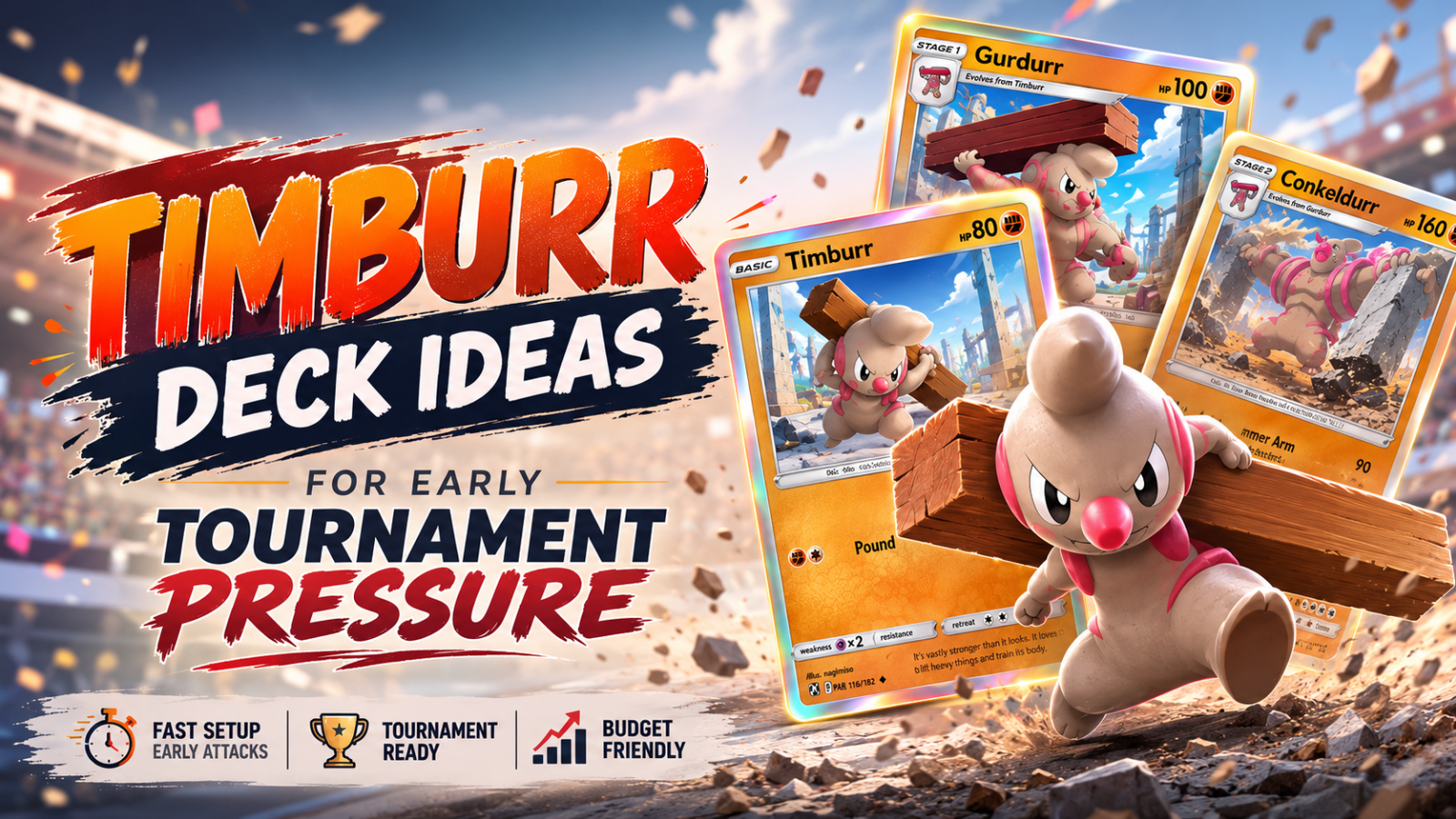
In tournament play, the opening turns often decide whether a deck can execute its game plan cleanly or is forced to play from behind. Timburr is a great example of a low-cost Basic that can still influence tempo, especially in aggressive starts or evolution-focused decks that want to buy time while setting up larger threats.
For players building around Ascended Heroes or adapting to the faster pace of White Flare, the question is not whether Timburr is a late-game powerhouse. It is whether a simple Basic attacker can create enough early pressure to shape prize trade patterns, force awkward responses, and keep the opponent from developing freely. In the right shell, the answer is absolutely yes.
Why Timburr Matters in Tournament Play
Timburr stands out because cheap Basics do more than attack. They establish board presence, punish slow openings, and force the opponent to spend resources on a small target instead of advancing their main strategy. In a tournament setting, that kind of pressure can be just as valuable as raw damage.
Low-cost Basic attackers matter most when they accomplish one or more of the following:
- Create a meaningful turn-one or turn-two attack.
- Force the opponent to bench additional Basics, increasing their vulnerability.
- Set up favorable prize trades by taking an early knockout on a support Pokémon.
- Buy time for evolution lines to reach their key stages.
That last point is especially important in decks built around Ascended Heroes. If your list leans on evolution chains, you often need a pivot Pokémon that can fight for tempo while your main plan assembles. A card like Timburr can help transform an otherwise passive opening into a board state that pressures the opponent immediately.
Early Pressure and Prize Trade Math
The biggest misconception newer players have about Basic attackers is that “small damage” is not worth slotting into a competitive list. In reality, early damage is often valuable because it changes the prize map. If Timburr softens a target, finishes off a fragile support Pokémon, or forces the opponent to retreat an active starter, you may gain more than the raw numbers suggest.
In tournament games, prize efficiency is everything. If your opponent opens with something they would rather preserve, Timburr can turn that into an immediate liability. Even when it only takes one prize card, the tempo swing can be enough to justify the slot, because the opponent is now reacting instead of advancing their ideal setup.
This matters even more when facing decks from White Flare that aim to establish a fast board and snowball with pressure. When both players are trying to win the opening exchange, the deck that uses its Basic attacker better usually dictates the pace. Timburr can be the difference between letting an opponent stabilize and forcing them to spend a turn on recovery.
When a Simple Basic Attacker Is Actually Correct
Not every deck wants Timburr, but certain archetypes benefit from it more than others:
- Evolution decks: Lists that need time to evolve can use Timburr to prevent the opponent from taking a free lead.
- Tempo decks: If your game plan is built around maintaining momentum, Timburr helps you keep the active spot productive.
- Bench-focused strategies: Decks that rely on multiple setup Pokémon appreciate a Basic that can occupy the active while the board develops.
The practical test is simple: does Timburr improve your odds of surviving the opening turns while also threatening something relevant? If yes, it may earn a place in your tournament list even if it is not flashy.
Building Around Timburr in Ascended Heroes
When constructing a list for Ascended Heroes, look at Timburr as a tempo tool rather than a centerpiece. The card is most effective when it is supported by a structure that rewards early disruption and smooth transitions into stronger attackers.
Here are a few deck-building principles that make Timburr more effective:
- Prioritize consistency: Your opening hand needs enough Basic Pokémon and search cards so Timburr actually appears when you want it.
- Keep the active spot productive: If Timburr is going to start the game, it should either attack, force an awkward retreat, or absorb pressure efficiently.
- Plan the pivot turn: Know which attacker comes next so you are not stranded after Timburr does its job.
That “pivot turn” concept is vital in tournaments. A good early attacker is not judged only by how much damage it does, but by how easily it hands the game off to your main win condition. In Ascended Heroes, that often means using Timburr to keep the opponent honest while your engine builds the board behind it.
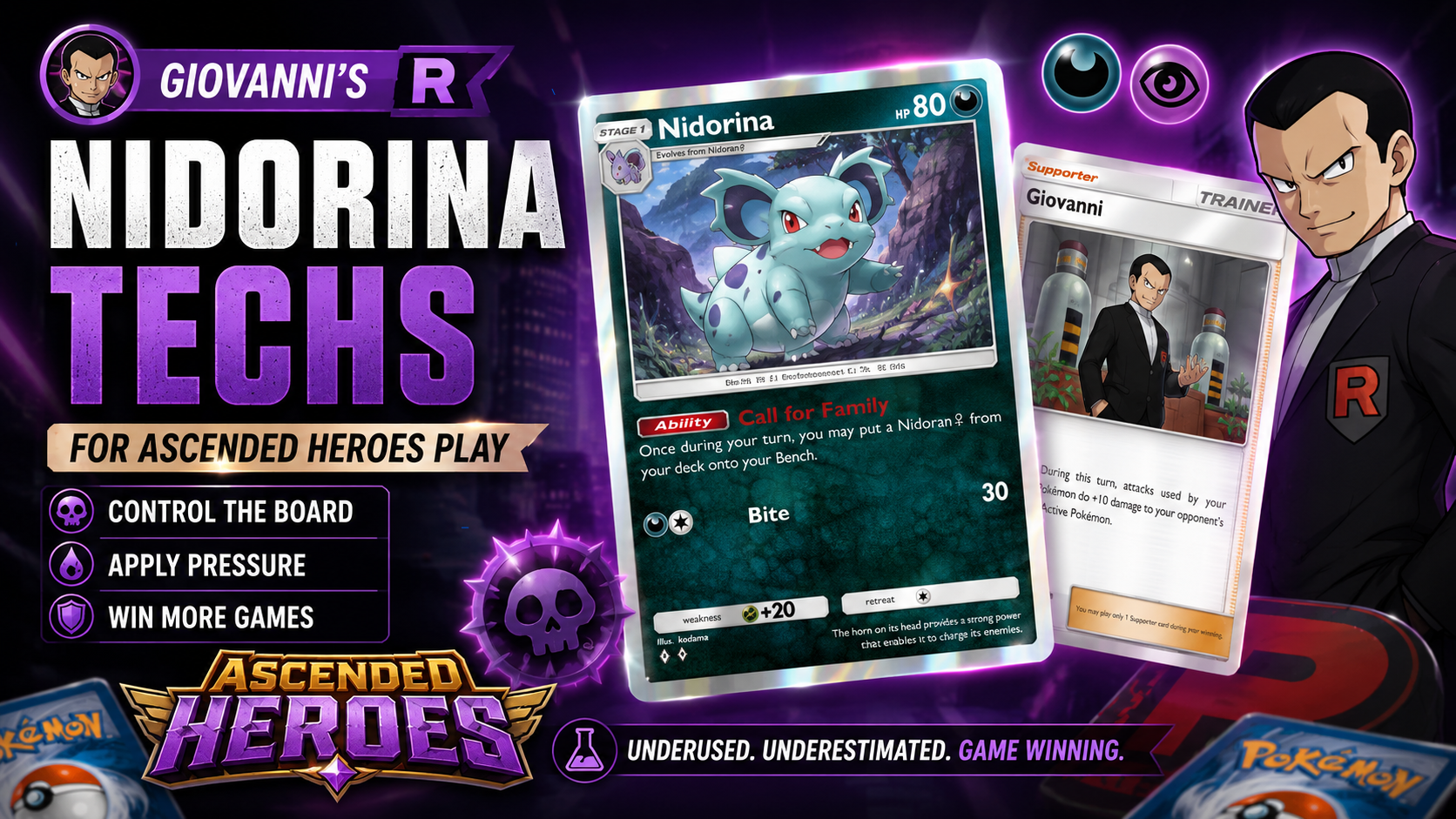
If you want a helpful comparison point for how early-stage Pokémon can influence matchup flow, see our breakdown of Giovanni’s Nidorina Matchups: Winning Play Patterns. The strategic lesson is similar: small, efficient cards often matter most when they create pressure before the opponent can fully execute.
Matchup Patterns: What Timburr Does Well
Timburr is strongest in matchups where the opponent’s first turns are greedy or setup-dependent. If they need a turn to bench multiple Pokémon, attach in sequence, or evolve before becoming dangerous, an early Basic attacker can punish them by forcing immediate action.
Good matchup patterns for Timburr typically include:
- Slow setup decks: If the opponent is searching for pieces, Timburr can pressure them before they stabilize.
- Fragile support lines: Small utility Pokémon are often the easiest targets for early damage.
- Prize mapping decks: Any list that depends on taking clean, exact knockouts may struggle if Timburr disrupts their math.
On the other hand, Timburr is less impressive when the opponent can ignore it without consequence or when they can easily remove it while still developing their board. In those games, you must ask whether the slot should become additional consistency, another utility Basic, or a stronger midgame attacker.
To better understand how official card text and rulings can affect play patterns, it is always worth checking the current card database on the official Pokémon TCG card search and the tournament policy resources at the Play! Pokémon tournament rules and resources. Tournament decisions are much cleaner when your assumptions about card function are based on current official information.
Sequencing Tips for Competitive Players
The best Timburr turns come from disciplined sequencing. Even a strong opening can be wasted if you bench the wrong Pokémon, overextend into a poor prize trade, or fail to plan your follow-up attacker.
Use these tournament-focused sequencing tips:
- Decide your ideal active early: If Timburr is your opener, identify whether it is attacking, stalling, or simply buying time.
- Protect your setup Pokémon: Bench only what you need early so the opponent cannot easily punish a crowded board.
- Keep retreat costs in mind: If Timburr is likely to be trapped, plan your switch resources before committing.
- Track prize pressure: When Timburr takes an early knockout, think about whether you can maintain that lead or whether you should shift into defense.
One of the reasons Timburr can be so effective is that it asks simple questions the opponent must answer immediately. That is valuable in a metagame defined by speed, because forcing a response often matters more than maximizing damage output.
Final Takeaway: Low-Cost Pressure Wins More Games Than You Think
Timburr is not the kind of card that wins headlines, but it can absolutely win rounds. In the right tournament build, it provides early pressure, improves prize trade patterns, and helps evolution decks survive the most important stage of the game: the opening turns.
If you are testing lists for Ascended Heroes or adapting to the pace of White Flare, look closely at your first two turns and ask a hard question: does your deck do anything meaningful before its main engine is online? If the answer is no, a simple Basic attacker like Timburr may be exactly the kind of card that turns a shaky opening into a competitive one.
Build for tempo, plan your prize map, and treat early pressure as a real win condition. That mindset is what separates a casual list from a tournament-ready deck.